


About & Care Philosophy
Medicine is an evidence-based science. Healing is an unhurried craft.
Why we practice this way.
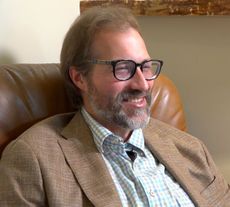
A personal message from founder Dr. Michael Boggs on choosing to practice psychiatry differently.
I was young when Kurt Cobain died.
What I remember is not the news itself but how little anyone around me seemed able to say about it. Someone who appeared, from the outside, to have everything had been carrying more pain than people understood.
This kind of suffering is real, more common than anyone admits, and treatable.
Kurt Cobain’s suicide - and a desire to prevent similar future events - is one of the reasons I became a psychiatrist.
Where I found I was useful
Medical school moves you through every specialty a physician is expected to consider. What surprised me was where I felt most at home.
It was in the rooms with people who were most unwell. Patients in the middle of severe episodes, at moments when they were frightening to others and frightened themselves. I found I could talk with them. More importantly, I found that they would talk with me.
That was not something I had trained for. It was a fit.
What the systems could not protect
I spent years in hospital and agency settings. I learned a great deal there and I am grateful for the training.
I also watched those systems place steady pressure on the one thing that most reliably predicts whether a person recovers: the relationship between a patient and their physician.
Caseloads grew. Visits shortened. Providers rotated. The therapeutic alliance, which decades of research place near the center of good outcomes, has been in many ways surrendered, because it is the hardest thing to measure and takes time to nurture.
Person-Centered Psychiatry exists in part because we don’t practice that way. It’s a new practice with a decidedly old-school person-centered philosophy.
How healing actually happens
In my experience, it follows different timelines.
Sometimes it arrives suddenly. The right medication, chosen carefully and started at the right moment, alongside a relationship in which someone finally feels understood, can change a person's life in one or two weeks. For someone who has been suffering for years, that shift is difficult to overstate.
More often it unfolds quietly. Three months. Three years. Five years. Steady work with the same physician, who remembers what last winter was like, who knows your circumstances, who can tell the difference between a difficult month and a returning illness.
Both are real. Neither is possible in fifteen minutes.

Rigorous medicine, held with an open mind.
Evidence sets the floor. Your preferences shape what happens above it.
01
Getting the medication right is the baseline, not the endpoint
We practice psychopharmacology specifically rather than sequentially. That means considering which neurotransmitter systems are actually involved in your presentation instead of working down a list. Depression that shows itself primarily as a loss of drive and motivation, for example, often points toward dopamine, and toward options many clinicians no longer reach for.
When the clinical picture calls for it, we are comfortable using sophisticated approaches, including MAOIs and pramipexole. They require genuine expertise and close monitoring. They also help people who have been told that nothing works.
02
When you would rather not take a standard antidepressant
Some patients arrive certain that they do not want conventional medication.
That is information, not resistance.
If you are hesitant about a medication such as Lexapro, I will not spend the visit persuading you. I will ask what concerns you, and then we will look together at what the evidence supports. For some patients that includes botanicals with real clinical research behind them, among them St. John’s Wort, Kava, and SAM-E. Saffron, Lavender, Ashwagandha, and Turmeric can sometimes have roles too. As can Omega-3s and broader good nutrition.
These are selected and monitored with the same care as any prescription. Several carry meaningful interactions and contraindications, which is exactly why they belong in the hands of a physician who knows your full history rather than on a shelf in a supplement aisle.
03
The foundations underneath the medicine
A great deal of what shapes mental health is not strictly psychiatric.
Sleep • Movement • Time outdoors • People you can talk to honestly • Caffeine • Alcohol & cannabis
What caffeine is doing to your afternoons, and what alcohol or cannabis is doing to the structure of your sleep. These are not lectures delivered at the end of a visit. They are clinical variables, and I treat them as part of the picture.
04
Therapy is part of every visit
Whether or not we call it that.
We draw on cognitive behavioral therapy, dialectical behavior therapy, acceptance and commitment therapy, motivational interviewing, and psychodynamic work, among other modalities, using whichever suits the person and the moment.
Sixteen acres, and what they teach.
The practice is grounded on sixteen acres in New Hampshire. Fourteen of them are woods. There is a stream, and there are orchards I tend myself.
This is not nostalgia. It is stewardship, and it is a philosophy of pace.
A farm makes certain lessons unavoidable. Seasons arrive on their own schedule. Trees do not fruit because you need them to. Growth asks for patience, attention, and the willingness to do the same quiet work year after year before there is any evidence it is working.
Healing follows the same rhythm.
Most care here is delivered through secure telemental health, which is both convenient and clinically sound. The land remains a real place, and it continues to set the pace of everything that happens in this practice.
When you invest in your own care, you are also supporting the quiet work of keeping this place well. That connection is not merely symbolic.
Michael Nathan Boggs, MD
Board-certified adult psychiatrist. Founder of Person-Centered Psychiatry PLLC.
Outside the practice, I am a husband and a father, which are the roles I would want listed first.
My spiritual life is inclusive and earth-centered, shaped by Waldorf education, Unitarian Universalism, and a long-held sense that the natural world has something to teach us about care.
I spend my free hours in the orchards and gardens and caring for the horses, dogs, and cats. I am fond of good food, unhurried conversation, and a genuinely excellent cup of coffee.